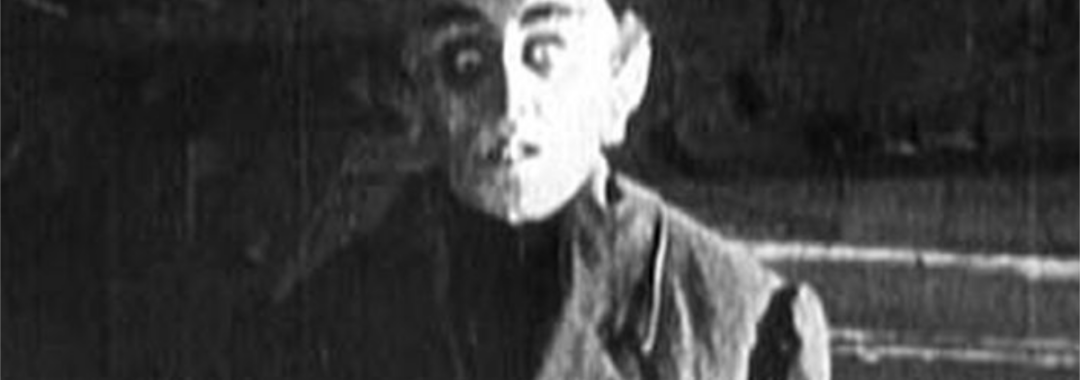
Max Schreck as Count Orlok in Nosferatu (1922)

How I Create Memorable Characters Without Planning Them

People often ask me how I create memorable characters who feel like actual people. No, honestly, they really do. I wouldn’t lie to you about that. Maybe just a little bit…

But I digress. I’ve talked to a lot of other writers about how they create their characters (it’s all we authors chat about when hanging out), and every writer does it differently.

How it started

So, let’s go back to way back when. I wanted to be a writer, and if I knew anything about writers, it was that we would do everything and anything to put off the actual writing part. And I was very keen to do my bit.

I read all the books and followed their advice. I created extensive templates for my characters, even using character sheets from old Dungeons & Dragons campaigns, including such ridiculous things as:

  • Worst smell they associated with childhood
  • What they lie they told most often
  • Something they pretended to understand
  • A secretly envied profession

And more!

I made absolutely sure I knew the plot and its characters backwards, so when it came time to write, everything was covered. All I had to do was write the damn thing… which is where it all fell apart and, in an unexpected plot twist, it all came together.

How pantser writing changed my characters

From the off, my characters and the stories they influenced would not behave. They had their own ideas about who they were and what they wanted to do, and no matter how much I prepared, I ended up writing vastly different stories than I intended. Indeed. My writing process is, first and foremost:

finding out who my characters are and then: what it is they want to do.

This is what is called Pansterism or the Panstser Process. Writing stories by the seat of your pants. I know, scary, isn't it? Now imagine trying to write mysteries that way? I'm a real sucker for punishment.

Characters completely take over my writing process, becoming themselves in the instant they start speaking and interacting with each other. In fact... they are speaking to me now, but they steadfastly won’t give me the next winning lottery numbers, the stubborn bastards.

Writing characters in the mist

It's an odd way to do it, but my characters suddenly appear out of the mist as if by magic. Like a fog blown away by a sudden breeze. Sure, I have a broad idea about what I want to write about, the genre and my ‘big idea’, but step one is always listening to my main protagonist by giving them an empty page and letting them speak to me.

I prefer to write in first person narrator, which is the best way for me to channel their thoughts. Any action that follows is then shaped by who they are and their internal logic. And I never try to pull them towards any preconceived notions. No matter how much that hurts.

And the reason for letting them do this?

Quite simply, the ideas that are generated via the actuality of writing are far more vibrant, exciting and just plain better than what I usually come up with beforehand. I know... it's bloody annoying.

Creating supporting characters

I usually have no idea regarding supporting characters. Just as I let my protagonists off the leash, I have no restraints on the people they may meet. In fact, I’m always quite excited to meet the people who inhabit my novels.

In The Peculiar Case Of The Missing Mondrian, the main character is a rather lazy, laconic individual named Jim Riven, who suffers at the hands of unwanted coincidences as daily punishment from an uncaring universe that appears to be having a private joke at his expense.

The first time we meet Riven, there’s someone at the door who has the audacity to come visit before his traditional wake-up time of somewhere in the afternoon. It turns out to be his ex, a girl called Landa.

Landa arrived as an absolute whirlwind and took me entirely by surprise, very much in the way she does for Jim Riven, who is henceforth launched into a coincidence-based mystery of epic proportions.

And it’s those arrivals that make the writing process interesting enough for me to continue.

Just like homework…

For me, writing is mostly like dreadful homework that I don’t want to do. It’s an odd dichotomy, wanting to write and hating it, but the pantser process gets me through to the two-thirds mark. After that comes the hard slog to the end.

Which I hate.

And then the editing process.

Which I also hate.

And then finally finishing the thing, which is more of a relief than anything else.

To be honest, by the time a book is out I’m usually sick to death of it.

My Hollywood connection

The only prep I sometimes do is give my characters a very quick physical description: stature, eye colour, hair colour, etc.

And to do this, I often base them on actors.

They can be Hollywood or TV stars of any generation, in films or soaps, or even adverts. It’s just a place to start. A reference for physical type. There is no other similarity.

What’s in a name?

I used to spend way too much time before writing a novel, painstakingly coming up with character names. But again, this was a waste of time, as the names very often didn’t match who the characters became when written.

I also got stuck trying to name them. The same for other names in my novels, like planets or villages, etc. It’s a creativity killer. So now I put zero effort into character names. Instead, I use a simple naming convention:

My first character’s name begins with A. Any name. Angela, for example. The next starts with B. Bill. And so on, grabbing the first name beginning with the next letter that comes to mind.

And it matters not that the characters may live on some far off-exotic land or planet, or in the past.

I do this because at some point in the novel or screenplay, the name will arrive. So instead of overthinking it, I let my subconscious take the strain, which is a far better employment of its reasoning capacities than waking me up at 3am to only fill me with existential dread.

Simulacrum what?

And there’s one more thing: nearly all my characters are aspects of myself. And this is where the oft-repeated adage comes in handy: always write what you know.

I’ve often wondered why I, and other similarly affected authors, write off-the-cuff like this. And in my pursuit of knowledge, far, far between and everywhere else, I’ve read that human brains create a sort of simulacrum of our family and friends. It builds internal models of other people, enough for us to hear their voice in our heads, anticipate what they might say and guess how they might react if, say, we were to buy them that shit present they'd hate.

The cerebellum appears to play a part in social prediction and sequencing too, although the science is rather messier than each person getting their own dedicated bit of brain. Shame I as I quite liked that idea.

I mention this because it feels very similar to what happens with the characters I create. I’d even say I have a stronger connection to them than I do with real people. I think this is because I don’t always really understand people or where they’re coming from due to annoying autism shitness. Of course, I still forget who they are once the books are finished.

Sorry, characters, but you’re dead to me.

Having said that…

Who is my most memorable character?

The most startling character I came up with using this process (or lack of it) was Vatic, the protagonist of Shattered Helix (perma-free), who arrived fully formed on the page as soon as he woke up from hypersleep.

To be honest, I didn’t even sketch him out or have Idea One about who he was, where he came from, or anything else for that matter. I just wanted to write someone being roughly woken from hypersleep, which became the spark for a 3-novel series. The name arrived as soon as it was mentioned in the story, and since Vatic turned out to be an empath, it was peculiarly serendipitous.

He was and is a force of nature. I didn’t have to think about how to write him as he wrote himself. Like he was standing next to me and whispering in my ear.

I’ve often wondered why, but I think I know the reason. He’s a character in a crisis with only six hours to solve a mystery, or he dies. There’s no time for pleasantries and nonsense.

I’ve always found all that extra stuff around social connection to be tedious and mostly unnecessary. I much prefer to get to the point as soon as possible. And, as has been proven in my other non-writing careers, I’m very, very good in a crisis.

That’s because I’m focused on the actual issue, fully aware that it needs resolving as quickly as possible and, most importantly, everyone around me has suddenly been stripped of their usual human bullshit. Nobody’s talking about the weather or wandering off into some unrelated nonsense. They actually answer the bloody questions I’m asking.

No fluff. No waffle. Just people doing stuff efficiently. And I think this is why Vatic leapt to life for me.

Flaws

This is the conclusion thingy where I try to tie up my disparate thoughts and sell you something.

But forgetting toxic capitalism and the end of days for a moment, there’s no set way to create characters. Always write what you know.  It's the best advice, and it will never change. But as you've just discovered, my characters simply refuse to do what I need them to do, and that, I believe, is what makes them feel so very real, because (and I apologise for the flaky logic) they are real. Well, to me, anyway.

Regardless of how you create them, you don’t want your protagonists to be beige, or the same, or similar to existing characters by other authors. And that is true for all your characters. No matter where they come from, they all need depth, idiosyncrasies, habits, flaws, and more…

I firmly believe that fully-rounded, believable characters (in whatever genre you write in or read), who operate on their own inner logic, are the key to successful novels and 4-5 star reviews, and, on occasion, many sleepless nights.

And hey, who would’ve thunk it? I just happen to have a book about that: All About Character Flaws: Making Your Characters Unhappy and Rewarding Your Readers Forever.

Enjoy!
Lunar Codex logo over a full Moon with the words ‘Archived on the Moon’

My Writing Is On The Moon & I Forgot To Mention It…

This happened to me recently. I was at an open-air theatre production of a show I’d done the sound for, talking to the assistant director, who, just like me, loved the Moon.

So, in true mansplaining tradition, I gave her the reasons why I loved Earth's most noticeable satellite. Here are a few of them because… It’s the Moon!

  • The Moon is unusually large, and its gravity helps stabilise Earth’s axial tilt, moderating extreme long-term climate changes
  • It produces most of Earth’s tides, creating intertidal environments that may have helped life move onto land
  • Its cycles help regulate biological clocks, influencing phenomena such as coral spawning and animal migration
  • By cosmic coincidence, it appears roughly the same size as the Sun, giving us total solar eclipses
  • And… so much more!

We happily chatted to the bemusement of those around us, and it was only almost a week later that I realised that there was another little fact about the Moon that I could’ve dropped into the conversation…

My writing is ON THE MOON! And, as a connected fact, my writing also burned up in Earth’s atmosphere while trying to get there!

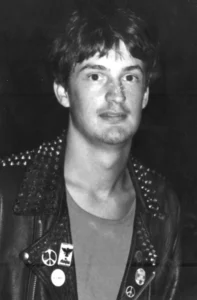
Black-and-white photograph of teenage K.J. Heritage wearing a studded leather jacket

Teenage Kev

Two sentences that, if I’d read them as a teenager, would’ve made me think that only writing glory awaited me in those far-off future lands.

But of course, here I am in the future, and I’m not remotely excited. Well maybe. Just a little bit.

My younger self would’ve been so amazed that he would’ve choked on his lager shandy. Proof, surely, that my future held the most wonderful success and the greatest of delights.

My writing on the fucking Moon!

And yet, the fact that I forgot to mention this to someone while actually talking about our shared love of Earth’s most popular heaven-bound companion needs some explanation.

A possible culprit: that damn modern world again, which has the most wonderful gift of making everything so much more possible and… less special.

Anyone can publish a book these days, which is empowering, but damn it, now the gates have been washed away under a flood of authors and AI slop, most of the magic has been washed away with them.

Even so, actually landing my writing on the Moon should be an achievement, right? And yet, maybe because of who I am (or have become) or because the modern world is crammed full of so many interesting or distracting things, it has barely registered with me—certainly not with the force it should have.

So what the hell am I talking about?

The Lunar Codex

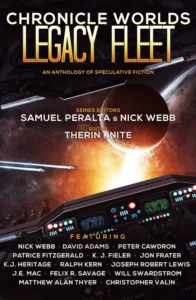
Cover of the science-fiction anthology Chronicle Worlds: Legacy FleetThe codex is a permanent cultural archive of human creativity stored upon the surface of the Moon.
It contains literature, art, music, film and other creative work by more than 50,000 creative artists, amounting to more than 250,000 cultural artefacts from 264 countries and territories, spread across a series of lunar missions.

And among them is little old me.

My small contribution to all this is Churchill's Rock, a science-fiction short story originally published in Chronicle Worlds: Legacy Fleet, an anthology presented by Samuel Peralta and Nick Webb. It became part of the Lunar Codex's Peregrine Collection.

The Codex was created by Canadian physicist Samuel Peralta, who is also behind a very successful series of sci-fi compilations: The Future Chronicles, which is how I got to know him.

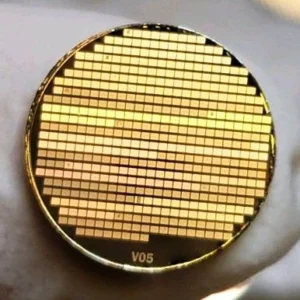
Circular gold Lunar Codex archival disc divided into a grid of microscopic storage sections

Lunar Codex Archival Storage Disc

This is what it says on their website: ‘The works are physically archived using technologies including etched nickel and silver, Nanofiche, quartz and other long-term storage media, packaged into protected capsules.’

So not exactly a book, which is a shame, as I think there would be something glorious about having an actual book as a physical remnant of my time in this idiosyncratic solar system placed on the Moon for all eternity (well, relative eternity).

And a book? It’s one of the most special human achievements, designed to fit in the hand, using a simple information-access mechanism (turning the pages). Magic.

But no, my story is etched onto ‘long-term storage media’. And for me, even though this is a wonderful and practical solution to the whole ‘how do we ship tons of books and art and whatnot to the Moon?’ issue, it’s a less-than-romantic solution.

Maybe this is why I have this strange indifference. The achievement is actually enormous. Properly so. Involving rockets, blast-offs, lunar trajectories and Moon landings. And yet, the physical object is a tiny piece of technology.

The launch

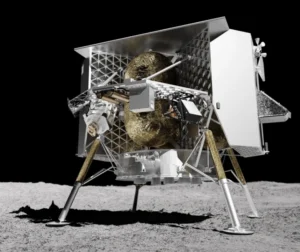
Artist’s rendering of Astrobotic’s Peregrine lunar lander on the Moon

Didn't quite make it...

So, on 8 January 2024, Churchill's Rock by K.J. Heritage left Earth aboard Astrobotic's Peregrine lunar lander, launched on the first flight of United Launch Alliance's Vulcan rocket.

And yeah, this was quite exciting. I’ve always loved science, space and rockets. Who doesn’t, right? And, even though this is actual rocket science, it doesn’t always go to plan. And, with that in mind, shortly after launch, Peregrine suffered a propulsion-system problem, meaning that it had no hope of landing.

Ten days later, on 18 January, it was deliberately guided back into Earth's atmosphere over a remote part of the South Pacific, where the spacecraft and its payload were destroyed during re-entry.

How many people had achieved the considerably more niche literary distinction of having written something that had travelled almost to the Moon, burning up in Earth’s atmosphere?

Not many author biographies contain the phrase ‘destroyed during atmospheric re-entry’. But even that, I’m sorry to admit, didn’t particularly impress.

Back-up

But, just like keeping a spare copy of that novel you accidentally deleted after drinking too much Shiraz, the Lunar Codex had planned for disaster.

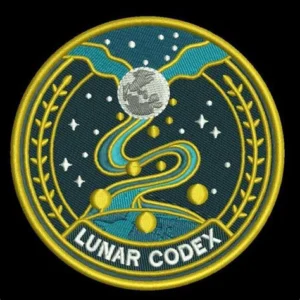
Embroidered Lunar Codex mission badge featuring the Moon, stars and golden orbital paths

My Lunar Codex Mission Badge

Following the loss of Peregrine, parts of its collection travelled on later Lunar Codex missions, including Serenity and Minerva, both carrying material from the Peregrine archive.

And this time, they made it. Which means that somewhere amongst those tiny archives sitting in the dust of another world is a record of Churchill's Rock.

My actual writing on the actual Moon…

Maybe it's just too far removed from where and who I am to make much of a dent.

Long after I'm gone, Churchill's Rock should still be there, indifferent to me, my life and this chaotic world.

But… it will be there. Something that could outlast me by perhaps billions of years. A sort of immortality bestowed on a tiny fraction of those who have ever lived on this wonderful, somewhat doomed planet.

I really should care more about that… but I don’t.

Not even enough to remember to mention it…

*Shrugs*


Further reading on the Codex
The Lunar Codex
The Story So far

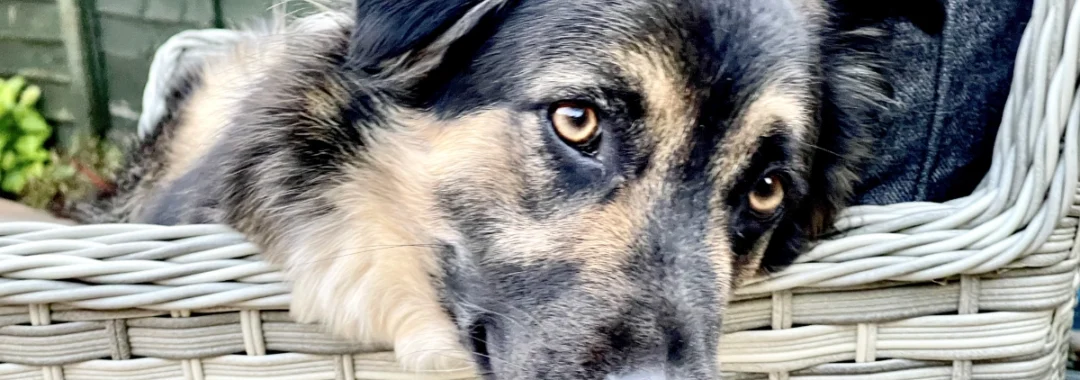
Rescue dog Jack aka The Dark Lord

Why You Should Adopt A Rescue Dog

If you're thinking about getting a furry friend to keep you company, consider adopting a rescue dog instead of buying from some dodgy breeder. Not only will you save a life, but you'll get the best wet kisses a dog can offer.

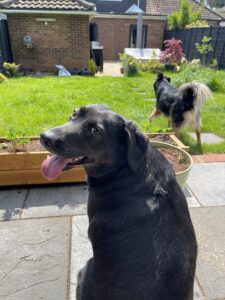
We adopted Jack (aka The Dark Lord - see main image), from a local rescue organisation four and a half years ago - and the little bugger has made a total difference to our lives. Not only does he bring endless joy to daily life, but he keeps me fit and healthy.

Plus, who needs a perfectly polished purebred when you can have a mixed-breed rescue mutt who barks like a loon, is terrified of flies, and has a heart of gold?

So, next time you're in the market for a new furry friend, skip the breeder and head to your local shelter to find your next best buddy. Trust me, you'll never regret it.

Why dogs are the very best

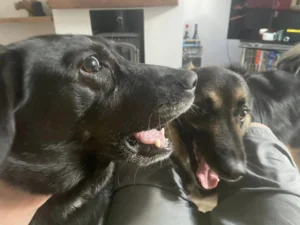
Zola 'The Gorgon' with her new brother, Rescue Jack

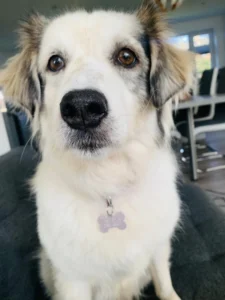
Our other rescue dog, Zola - 'The Gorgon'

There's no denying it - canine companionship is the ultimate antidote to a bad day. Sure, cats might be cute and all, but can they chase a ball or lick your face with that kind of enthusiasm? Unlikely.

Dogs are the very best because they offer a level of companionship that can't be found anywhere else. They'll never judge you, no matter how many times you mess your life up. They don't care about that because... THEY JUST LOVE YOU!

They'll always be there to lend an ear, or paw, when you need it. And don't even get me started on how cute they look when they tilt their head and give you that classic "Who, me?" look. How can anyone resist the charms of a furry best friend is beyond me.

Dogs just have a way of making life a little bit better, don't they?

Healthy hearts

walking your rescue dog will make you live longer... fact!

C'mon, we've still got miles to go!

You know what they say - a dog's love is the best medicine! Apparently, science agrees. Studies have shown that owning a dog can decrease your blood pressure, reduce stress, and even decrease your cholesterol levels. It's like having a furry little doctor on your team! Plus, it's a guaranteed way to get some exercise and fresh air.

And don't just take my word on this... let's look at the facts.

Dog owners:

  • have a 24% lower risk of dying from heart disease compared to those who don't own one
  • and are 54% more likely to hit their daily exercise requirements than those without a pooch.

Of course, you might trip over the thing and end up impaled on the dishwasher, so it's swings and roundabouts...

And let's not forget the mental health benefits - dogs have a way of bringing joy and companionship into our lives that can't be beaten. So next time someone tells you that having a dog is a big responsibility, just remind them of the upside - a happier, healthier life with a loyal bestie by your side!

Rescue Dogs are cuuuute!

Cute attack!!!!

The furry burglar alarm

When it comes to keeping your home safe from intruders, there's one furry friend that does the job better than any security system out there: a good ol' dog.

According to recent statistics, homes with dogs are 33% less likely to be targeted by burglars than those without. That's because dogs have a natural instinct to protect their pack.

Plus, who needs a home security system when you've got a four-legged alarm? Just imagine, if a stranger even thinks of stepping foot on your property, your dog will know about it, and their barking will alert you and your neighbours.

The Cost of Living Crisis

Dog patiently waiting to be rescued

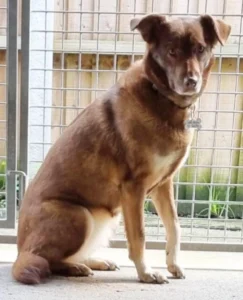
Choose me! I will make your life better!

More and more dogs are ending up in rescue centres because their owners just can't afford to take care of them anymore.

Loved family pets that have spent all of their lives with the same humans are reluctantly being given up. Having grown up with dogs, I can imagine how awful it would be to have to give away such a close family member.

But unlike us soppy humans, mutts are more resilient. They will always love their family, but that won't stop them from loving you if you adopt them. They'll be forever grateful and will love you just as much.

Why you should get a rescue dog and not a puppy

First, there is a growing industry of unscrupulous dog breeders who prioritise profit over the welfare of the animals they breed. It's important to remember that not all dog breeders do this, but with puppies retailing in the thousands, there is a market to make a quick buck by exploiting buyers who are easily seduced by a cute puppy.

So if your mind is set on a puppy, then please, do your research. Buy only from reputable breeders, and ALWAYS inspect their facilities before buying. And this advice is the same for cats or any animal.

And talking of money (which I hate, but it is what it is), rescue dogs are cheaper to 'buy'. I put 'buy' in inverted commas because when adopting a rescue animal, there is always a fee. This is a lot less than you would pay for a puppy. And there are other benefits also.

Rescue dogs are:

  • usually house-trained
  • chipped
  • vaccinated
  • and neutered.

This is because the charities that home rescue dogs make sure the animals that pass through their centres are neutered, chipped, and vaccinated. Depending on the rescue organisation, they may also offer support with vet bills and other expenses. But this does depend on the rescue centre/charity.

The downsides

Rescue dog, Zola on her first day with us and jack

Zola and Jack

Getting a nervous rescue dog can come with its own set of challenges. While adopting a rescue dog can be rewarding, it's important to be aware of the potential negatives. A nervous rescue dog may take time to adjust to its new environment and may require extra patience and attention from its owner.

The dog may display anxious behaviour, such as excessive barking or destructive tendencies like chewing on furniture or shoes. These behaviours can be frustrating for owners and can add stress for both the dog and the human.

Additionally, a nervous dog may struggle with socialisation and may be more prone to aggression towards other dogs or humans. However, with dedicated care, training, and patience, a nervous rescue dog can still become a loving and loyal companion.

Please remember that not all rescue dogs are like this, but it's important to be aware of the issues that may arise. However, getting a rescue dog isn't a lottery. Rescue centres spend time getting to know their animals, and they will be able to give you a full rundown of any issues for any dog you are potentially thinking of adopting.

And you will be vetted too! Rescue centres want to find forever homes for their dogs. So it's important you and your mutt fit together. Getting any dog is a serious commitment, and a rescue dog is no different.

Rescue Jack (aka The Dark Lord)

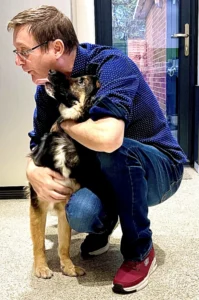
Kev hugging Rescue jack aka 'The Dark Lord'

The two dickheads...

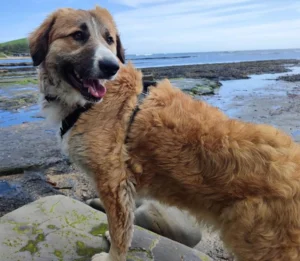
Here is Jack again. He’s a Romanian rescue, part Collie, part German Shepard, part dickhead. And what a beautiful lad he is. When we got him from the Full Moon Rescue Charity (where we also got our second rescue, Zola), we knew of his issues. Separation anxiety, barking at dogs, at humans, and at everything else, pulling on the lead and a fierce streak of independence and rebelliousness. But over the years we've had him, and with lots of patience (and some impatience), and hundreds of walks, he's so much better than he used to be.

And, I have to say, so am I.

He’s helped me with my anxiety, and a lot of other stuff. One thing is for sure, though: he certainly fits in with the household!

Nowadays, he no longer barks at humans on the street, although he barks when people arrive (I think he's just affronted). He occasionally barks at other dogs on the lead, but that's getting better, and his lead skills are now almost perfect. Adding Zola (who is very laid back apart from squirrels!) to the family also wasn't without its teething troubles, but the antidote to any dog tensions is walking. As soon as they were together on the Downs, chasing rabbits and birds, they became firm friends. And having a doggy companion has certainly helped Jack relax, although he's still a prick, bless him.

He is the most adorable fellow. And not one bit hindered by his stunning good looks! He doesn't have a bad bone in his body. And this is important: he is a work in progress, getting better all the time.

We knew of his issues, and we were more than happy to still take him in. But hundreds of other dogs, with and without problems, are waiting for adoption. If you want a loving mutt at your side, I suggest you search for local dog rescue organisations in your area.

And no matter where you are in the world, there will be rescue centres near you. Please go check them out.

WOOF!